Training professionals for an information-based society under the three pillars: “Laboratory Based Education,” “Career Support,” and “Intensive Training on Computer Science Fundamentals.”
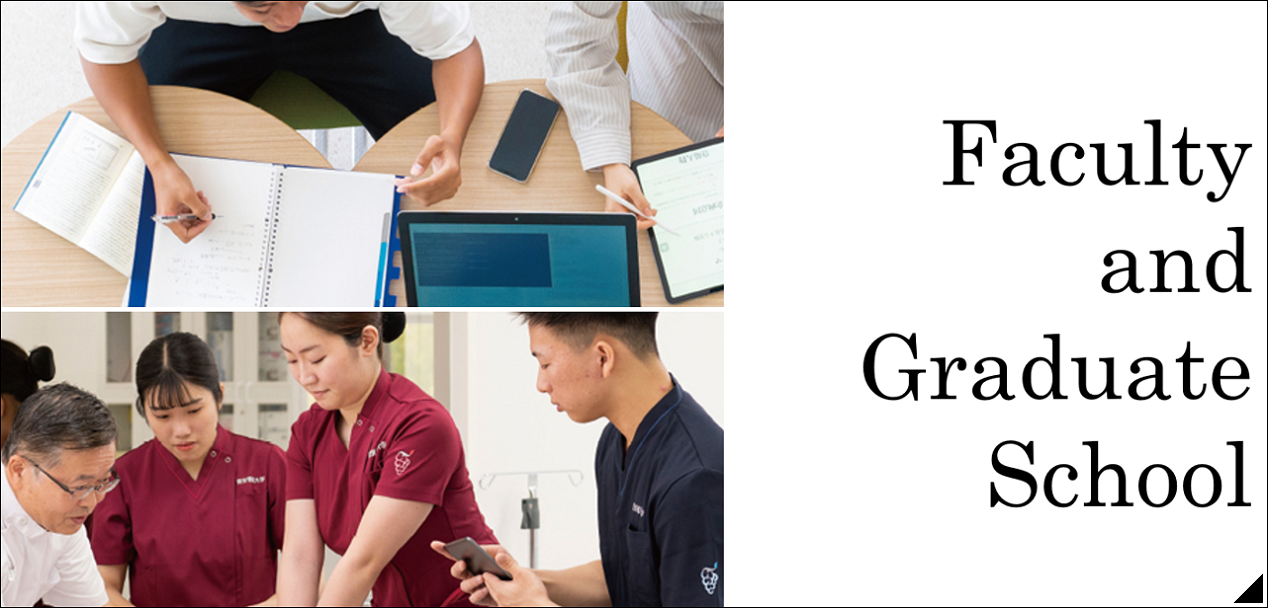
The Faculty of Informatics provides a comprehensive education in business, society, culture and the environment from the information and communications perspective, with the aim of creating talented professionals capable of meeting the needs of society. Through this, the students develop advanced information literacy for designing, constructing and operating information systems and media content.
The educational courses delivered by the Faculty of Informatics provide a comprehensive grounding in software-based informatics, predicated on the three pillars of “Laboratory Based Education,” “Career Support,” and “Intensive Training in Computer Science Fundamentals.”
Nurturing an information-oriented outlook alongside information processing technology
In an age where personal computers are the norm, a genuine “information-oriented outlook” is vital for acquiring information processing technology. Only with such an outlook is it possible to design and build reliable, user-friendly information systems. The Department of Information Systems seeks to nurture an information-oriented outlook while at the same time developing information processing technology.
A curriculum that fuses information and environmental issues to provide a practical education that contributes to the future of the human race
The primary objective is to explore the idea of necessary information in an information-oriented society. This requires an ability to utilize information meaningfully and effectively. The Department of Environmental Information nurtures an ability to utilize data-rich information through networks and software in order to grapple with a range of issues in society, such as ensuring the robustness of information technology, improving business management efficiency and contributing to the preservation of the natural environment.
Equipping strategists with both information literacy and business skills
In addition to advanced programming and network development skills, students study the full range of corporate activities and study the business environment in order to acquire value in the form of an “instant response capacity” towards the future. Under the “Laboratory Based Education” system, training for qualifications and practical classes employ both “team teaching” and primary teaching models.
Examining media communication in terms of the technology involved and its wider social context
We are giving enough knowledge about the media communication in terms of its know-how and its social & societal impact.
Students learn the how-to and the social role of the media communication in order to become excellent professionals in this domain. We provide them with a lot of subjects of exercises and practice and with good equipments equal to the level of professional use. Professionals in media also teaches their professional know-how´s.

Developing highly specialized professionals and researchers to meet the needs of society
Informatics as a combination of four distinct fields
The Graduate School pursues research in four fields that represent the extrapolation of other faculties and departments: “Management Information,” “Environmental Information, “Information Culture” and “Information Systems.” Research in these four areas produces highly skilled professionals capable of keeping abreast with rapid advances in information technology and social changes in the form of new developments in economic activity. The department also aims to establish the field of “Informatics” as a fully-fledged academic discipline.
4-1 Onaridai, Wakaba-ku,Chiba, 265-8501 Japan